Road engineers working between the rocky exposures of the Saanich Inlet and the broader agricultural lowlands near Blenkinsop Road encounter a stark contrast in subgrade behavior within a few kilometers. Where the soils shift from compact glacial till to pockets of saturated marine clay, the soaked CBR value can swing from over 20% to below 3%, a difference that dictates whether a pavement section needs 150 millimeters or more than 400 millimeters of granular base. A CBR road test performed in the field captures in-situ density and moisture, but the laboratory CBR test isolates the soil response under controlled compaction and soaking, providing the repeatable data required for mechanistic-empirical pavement design. In Saanich, where winter groundwater rises into the subgrade across much of the Cordova Bay lowlands, the soaked laboratory condition becomes the governing scenario for any flexible pavement structural section, making the test indispensable before tender documents are finalized.
A soaked CBR of 3% versus 8% in Saanich glacial till can change the required asphalt thickness by 50 millimeters, a cost driver that justifies the test ten times over.
Method and coverage
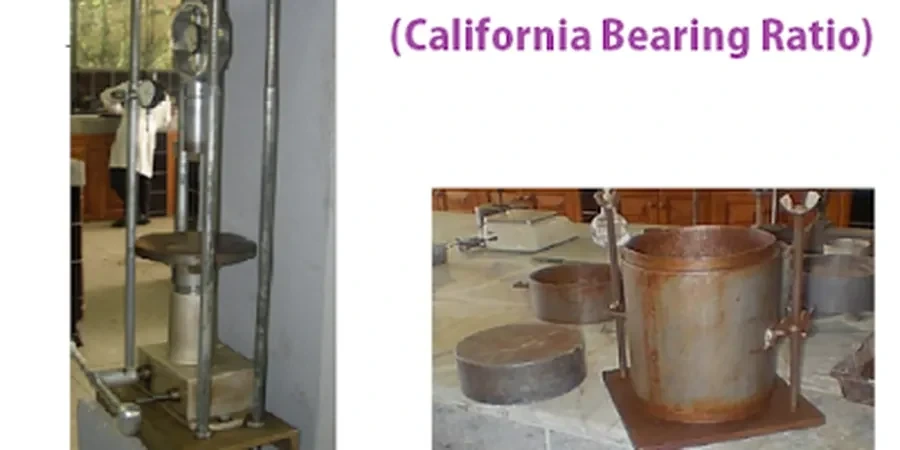
Regional considerations
The British Columbia Ministry of Transportation and Infrastructure supplements the national pavement design framework with regional calibration factors that recognize the wet, temperate climate of southern Vancouver Island as a severe moisture-loading environment. In Saanich, omitting a laboratory CBR evaluation introduces a quantified risk: a subgrade designed on assumed values that prove optimistic by 4 to 6 CBR points can lead to fatigue cracking within the first five years of service, a distress pattern already documented on several secondary roads in the municipality. The ASTM D1883 procedure mitigates this by enforcing a worst-case soaked condition that mirrors the prolonged saturation the subgrade experiences between November and March, when the water table in the Rithet's Bog area and similar low-lying zones rises to within 600 millimeters of the finished grade. A single borehole with field density measurement is insufficient here because the remolded laboratory specimen reveals how construction compaction and post-construction moisture will actually interact with the native fines, a prediction the undisturbed sample cannot supply.
Standards that apply
ASTM D1883-21: Standard Test Method for California Bearing Ratio (CBR) of Laboratory-Compacted Soils, ASTM D1557-12: Standard Test Methods for Laboratory Compaction Characteristics of Soil Using Modified Effort, BC MoTI Supplement to TAC Pavement Design Guide (regional moisture calibration)
Other technical services
Soaked and Unsoaked CBR Determination
Three-point compaction curve with CBR specimens molded at optimum, wet of optimum, and dry of optimum moisture contents, soaked 96 hours under a 4.5-kilogram surcharge to replicate the overburden effect of the pavement structure. Swell is recorded daily and the soaked CBR is reported as the governing design value.
Pavement Subgrade Characterization Package
Combines laboratory CBR with grain-size distribution and Atterberg limits on the same bulk sample, providing the full set of soil constants required for the AASHTO 1993 and mechanistic-empirical design methods. The package includes a subgrade resilient modulus estimate correlated from CBR using the standard M_R = 10.3 × CBR (MPa) relationship, applicable to fine-grained Saanich soils.
Typical parameters
Quick answers
How much does a laboratory CBR test cost in Saanich?
A standard three-point laboratory CBR determination, including Proctor compaction and 96-hour soaking, ranges between CA$170 and CA$320 per sample. The cost depends on whether the client requires the modified or standard compaction effort and the number of moisture points tested. Bulk pricing applies when five or more specimens are submitted from the same project.
How long does the laboratory CBR test take from sample delivery to report?
The soaking period mandated by ASTM D1883 is 96 hours, and when combined with specimen preparation, compaction, moisture conditioning, and penetration testing, the typical turnaround is seven to eight working days. Expedited reporting can be arranged for projects on a critical path, though the four-day soak cannot be shortened without compromising the standard.
Can the laboratory CBR value be correlated to the resilient modulus for Saanich soils?
Yes, the correlation M_R (MPa) = 10.3 × CBR is widely accepted for fine-grained soils in British Columbia and is referenced in the BC MoTI supplement to the TAC Pavement Design Guide. However, this relationship was developed for CBR values up to approximately 12% and becomes less reliable for granular materials with high CBR; in those cases, repeated load triaxial testing provides a direct M_R measurement.
What soil types in Saanich require special attention during CBR specimen preparation?
The silty Vashon Drift tills and localized marine clays found in low-lying areas of Saanich are particularly sensitive to remolding moisture content. Specimens prepared even 1% wet of optimum can show a CBR drop of 30% or more relative to optimum. Our protocol includes a scanning of the moisture-density curve at 0.5% increments when the plasticity index exceeds 12, ensuring the design CBR is not overly optimistic.