Laboratory testing of soil and aggregate materials forms the backbone of geotechnical engineering in Saanich, a district on southern Vancouver Island where complex glacial geology and coastal processes intersect. This category encompasses the physical and mechanical characterization of earth materials through standardized procedures, providing the data engineers need to design safe foundations, stable slopes, and durable infrastructure. In Saanich, where development pressures continue to reshape both urban and rural landscapes, laboratory analysis transforms field observations into quantifiable parameters that directly inform bearing capacity calculations, settlement predictions, and slope stability models. Without rigorous laboratory testing, geotechnical recommendations remain speculative, exposing projects to unnecessary risk in a region known for its variable subsurface conditions.
The surficial geology of Saanich is dominated by glacial deposits from the Fraser Glaciation, including till, glaciomarine clay, and outwash sands, often overlying bedrock of the Wrangellia terrane. These materials exhibit significant spatial variability across the district, from the marine clays near Patricia Bay to the coarse-grained deltaic deposits along the Colquitz River corridor. Glaciomarine clays in particular present challenges due to their sensitivity and potential for strain-softening behavior, making accurate determination of parameters like Atterberg limits essential for assessing liquefaction susceptibility and long-term settlement. Similarly, the gradation of granular deposits influences drainage characteristics and compaction behavior, requiring precise grain size analysis to predict performance under load. Understanding these local geological nuances through laboratory testing is not optional but fundamental to responsible engineering practice on Vancouver Island.
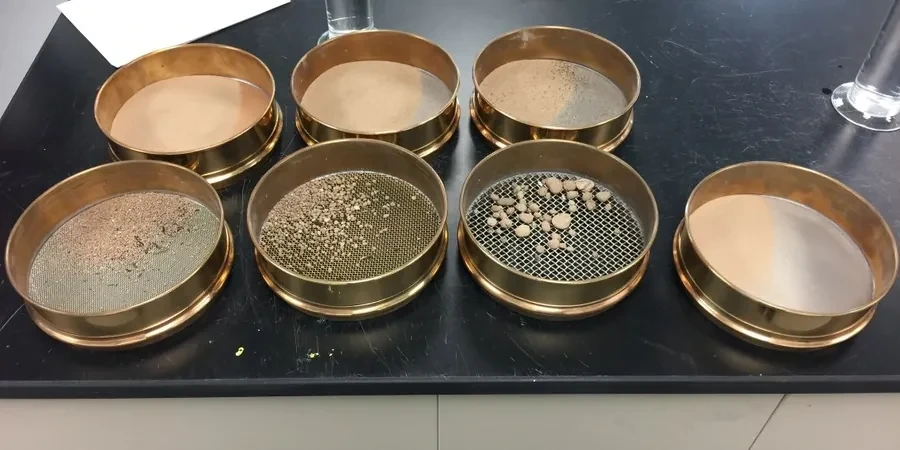
Canadian standards govern all laboratory testing procedures relevant to geotechnical investigations in Saanich, with the CSA A3000 series and ASTM International methods forming the regulatory framework. The British Columbia Building Code references these standards explicitly, requiring that soil parameters used in foundation design be derived from recognized laboratory test methods. For projects involving public infrastructure or environmental assessments, additional provincial requirements under the Environmental Management Act may apply, particularly when testing involves contaminated soils or materials destined for off-site disposal. Municipal bylaws in Saanich often mandate geotechnical reports for subdivision applications and steep slope developments, and these reports must include laboratory data that meets the Canadian Council of Independent Laboratories certification requirements. Compliance with these standards ensures that test results are defensible, reproducible, and admissible in regulatory reviews.
A wide range of project types in Saanich depend on laboratory testing to manage geotechnical risk effectively. Residential developments on the sloping terrain of Gordon Head and Cordova Bay require careful evaluation of soil strength and compressibility to prevent foundation distress and slope failures. Infrastructure projects such as the Saanich Peninsula Wastewater Treatment Plant upgrades involve extensive earthworks where compaction control and material suitability testing are critical to performance. Road widening along Highway 17 and the Patricia Bay Highway corridor demands laboratory characterization of subgrade soils to inform pavement design and drainage strategies. Even smaller-scale projects like retaining wall installations and septic field assessments benefit from basic index testing to confirm soil behavior under saturated and unsaturated conditions. In every case, laboratory data reduces uncertainty and supports cost-effective design decisions.
Quick answers
What types of laboratory tests are typically included in a geotechnical investigation in Saanich?
A standard geotechnical laboratory program in Saanich typically includes index property tests such as moisture content, grain size analysis, and Atterberg limits to classify soils, along with engineering property tests like consolidation, direct shear, and triaxial compression to determine strength and compressibility. Chemical testing for sulfate content or organic matter may be added when aggressive soil conditions are suspected, particularly in marine clay deposits common to the region.
How do local soil conditions in Saanich influence the selection of laboratory tests?
The glacial and marine origin of Saanich soils dictates a focus on tests that quantify clay sensitivity, gradation variability, and drainage characteristics. Glaciomarine clays require careful Atterberg limit determination and consolidation testing to assess settlement potential, while outwash sands and gravels demand particle size analysis and permeability testing. The presence of sensitive clays also necessitates undisturbed sampling techniques to preserve in-situ structure for accurate laboratory results.
What Canadian standards apply to laboratory testing for geotechnical projects in Saanich?
Laboratory testing in Saanich follows CSA A3000 series standards for concrete and aggregate testing, while soil testing adheres to ASTM International methods such as ASTM D422 for grain size analysis and ASTM D4318 for Atterberg limits. The British Columbia Building Code references these standards, and laboratories performing work for public projects typically maintain CCIL certification. Provincial environmental regulations may impose additional testing requirements for contaminated materials.
How long does a typical laboratory testing program take for a Saanich development project?
Turnaround times for laboratory testing in Saanich vary with project scope, but index property tests like grain size analysis and Atterberg limits can often be completed within five to seven business days. More complex tests such as consolidation or triaxial shear may require two to four weeks due to the time-dependent nature of the procedures. Rush testing is often available for time-sensitive projects, though scheduling should account for seasonal demand peaks in the local construction industry.