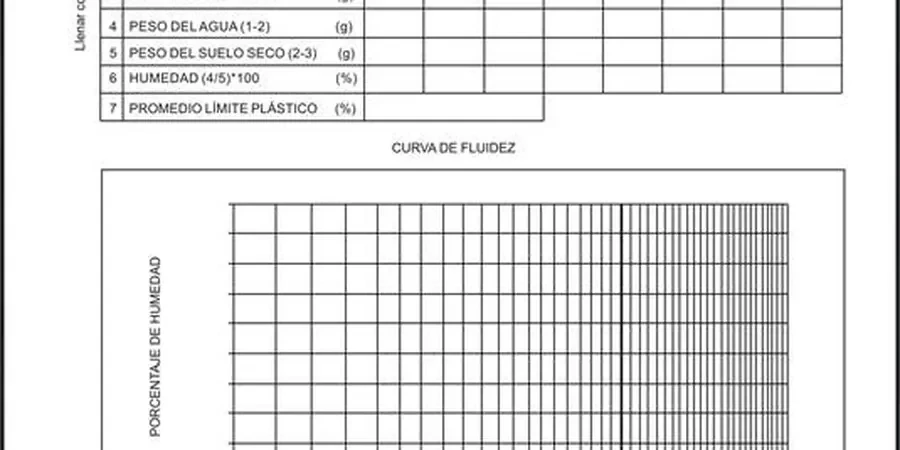
The clay in Cordova Bay behaves nothing like the silt out on the Saanich Peninsula. Builders learn this fast. One side drains. The other holds water like a sponge and swells come November. That difference shows up in the Atterberg limits. Our lab runs the Casagrande cup and the plastic limit thread test on every sample from Saanich to flag these contrasts before a footing goes in. When the liquid limit jumps above 50 in a glacial till sample from the Blenkinsop Valley, we know the foundation needs a different approach. A grain-size analysis often confirms the gradation shift behind that jump, giving you the full picture of the soil’s behavior under load.
Plasticity index tells you more about shrink-swell risk in Saanich glacial till than any visual classification ever will.
Method and coverage
Regional considerations
Saanich sits on the edge of the Juan de Fuca plate boundary. That means seismic shaking is a design reality, and soft silts with high plasticity lose strength fast under cyclic loading. A soil with a PI above 20 and a moisture content near the liquid limit can turn into a slurry during a moderate earthquake. We see this risk in the low-lying marine clays near Patricia Bay. A liquefaction screening often follows when Atterberg results place the soil in the CH or MH zone under the Unified Soil Classification. Ignoring the plasticity index on a Saanich site means gambling on the foundation’s recovery after the next crustal quake.
Standards that apply
ASTM D4318-17: Standard Test Methods for Liquid Limit, Plastic Limit, and Plasticity Index of Soils, ASTM D2487-17: Standard Practice for Classification of Soils for Engineering Purposes (Unified Soil Classification System), CSA A23.3: Design of Concrete Structures (references soil classification for foundation design)
Other technical services
Full Atterberg Suite
Liquid limit by Casagrande cup, plastic limit by thread-rolling, and calculated plasticity index. Delivered with the USCS symbol and group name.
Multi-Point Liquid Limit
Four-point determination for critical projects where the flow curve slope needs verification. Standard for forensic or disputed soil classifications.
Expedited Turnaround
Same-day reporting for Saanich emergency repairs. Sample received by 9 AM, results emailed by 4 PM.
Combined Index Package
Atterberg limits plus grain-size distribution and natural moisture content. Covers the full classification needs for NBCC-compliant foundation reports.
Typical parameters
Quick answers
How much does Atterberg limits testing cost in Saanich?
For a standard determination covering liquid limit, plastic limit, and plasticity index, the fee ranges from CA$80 to CA$130 per sample. The price depends on whether you need a single-point or multi-point liquid limit and how quickly you need the results.
How many days does the lab take to report results?
Routine testing takes three business days from sample receipt. We offer a 24-hour rush option for Saanich projects facing a tight foundation inspection schedule. The process requires oven-drying and a full soaking period, so same-day results need the sample delivered before 9 AM.
What soil types in Saanich need Atterberg testing the most?
The glacial till, glaciomarine silts, and the Colwood clay lenses common across the Saanich Peninsula. Any fine-grained soil that can be rolled into a thread at field moisture should be tested. If the material feels greasy and holds a shine when cut with a knife, the plasticity index matters for your design.
Do you pick up samples from the job site in Saanich?
We coordinate sample pickup across the Greater Victoria area, including all of Saanich. Samples must be sealed in airtight containers at the point of excavation. Our courier runs cover the Cordova Bay, Broadmead, and West Saanich Road corridors daily on a scheduled route.