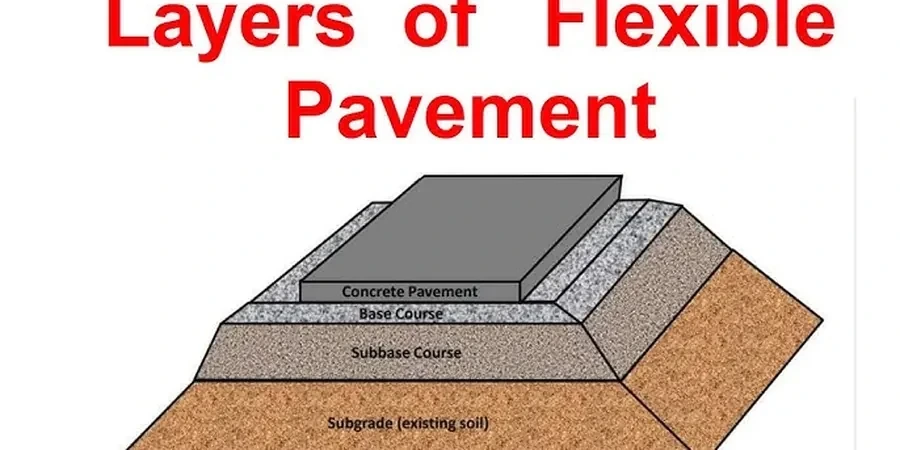
Flexible pavement design on Vancouver Island requires a methodical approach that accounts for the region's unique subgrade conditions, and in Saanich, the combination of marine clay deposits and glacial till demands careful structural analysis. The AASHTO 1993 design guide, supplemented by the Ministry of Transportation and Infrastructure of British Columbia standards, provides the analytical framework our team applies to every project, from residential driveways near Elk Lake to commercial parking lots in the Uptown area. We integrate field data from test pits and laboratory CBR values to calibrate layer coefficients, ensuring the asphalt concrete, base, and subbase courses work together as a unified system rather than as isolated materials. Saanich's average annual precipitation of approximately 880 mm, concentrated between October and March, introduces seasonal moisture fluctuations that directly affect resilient modulus values, making drainage design an inseparable component of the structural design process. Our laboratory evaluates both soaked and unsoaked CBR specimens to quantify the strength loss typical of silty subgrades encountered across the Saanich Peninsula.
Subgrade resilient modulus dictates the entire pavement structure: in Saanich, seasonal moisture variation can reduce effective Mr by 40–60 percent between August and January.
Method and coverage
Regional considerations
The Saanich Peninsula is underlain by a complex stratigraphy of Vashon drift, glaciomarine silts, and pockets of compressible organic soils that can produce differential settlement beneath flexible pavements if not identified during the site investigation phase. A particularly sensitive condition occurs where the Colwood member of the Metchosin Formation weathers to a plastic clay that exhibits significant volume change with moisture cycling, leading to longitudinal cracking along pavement edges within the first five years of service if the base course is underdesigned. Our design approach mitigates this risk through a multi-layered subgrade evaluation that includes dynamic cone penetrometer profiling at 25-metre intervals, supplemented by laboratory classification of Atterberg limits and particle size distribution, so that sections with plasticity index exceeding 20 are assigned a reduced effective roadbed soil modulus. Where the natural subgrade falls below a CBR of 3 percent in the soaked condition, we evaluate subgrade stabilization options such as lime modification or geogrid-reinforced aggregate layers to achieve the target structural number without requiring impractical excavation depths. Ignoring these localized soil transitions, which can occur over distances as short as 30 metres in the rolling terrain between Cordova Bay and Prospect Lake, results in premature fatigue cracking that is far more costly to remediate than the initial design effort.
Standards that apply
AASHTO Guide for Design of Pavement Structures, 1993, ASTM D1883-21 Standard Test Method for California Bearing Ratio (CBR) of Laboratory-Compacted Soils, BC Ministry of Transportation and Infrastructure Pavement Design Manual, ASTM D698-12 Standard Test Methods for Laboratory Compaction Characteristics of Soil Using Standard Effort, CSA A23.1 Concrete Materials and Methods of Concrete Construction (for rigid pavement tie-ins)
Other technical services
Subgrade Investigation and CBR Testing
Field DCP profiling combined with laboratory CBR determination on both undisturbed Shelby tube samples and remolded specimens compacted at standard Proctor energy. We establish the design resilient modulus for each uniform subgrade section identified across the site.
Pavement Structural Design
Layer thickness and material specification using AASHTO 93 procedures with BC MTO regional calibration. We offer structural number calculations, layer coefficient selection, and drainage coefficient determination for the specific moisture regime of your Saanich site.
Asphalt Mix Design Verification
Marshall and Superpave mix design review including volumetrics, moisture sensitivity testing per ASTM D4867, and rutting resistance evaluation using the Hamburg wheel-tracking device. Binder grade selection accounts for Saanich climate data and traffic speed conditions.
Construction QA/QC and Density Testing
Nuclear density gauge testing during base and asphalt placement, correlated with sand cone calibration. We document compaction compliance to specification and offer the density records required for municipal acceptance in Saanich.
Typical parameters
Quick answers
What is the typical flexible pavement structure for a residential driveway in Saanich?
For a standard residential driveway on competent subgrade (CBR ≥ 5%), the typical structure consists of 50 mm of PG 58-28 asphalt concrete over 200 mm of compacted granular base course (BC MTO Granular A type). If the natural subgrade is silty clay with CBR below 3%, we increase the granular base to 300 mm or specify a geotextile separation layer to prevent fines migration. The design assumes passenger vehicle loading only and does not include ESALs from heavy truck traffic.
How much does a flexible pavement design study cost in Saanich?
A complete pavement design package including subgrade investigation, laboratory CBR testing, and structural design report typically ranges from CA$2,110 to CA$7,710 depending on the project area, number of test locations required, and traffic classification complexity. Smaller residential projects fall at the lower end, while commercial parking lots and collector roads with detailed ESAL analysis are at the upper end.
Why does Saanich require soaked CBR values for pavement design?
Soaked CBR testing simulates the worst-case subgrade condition that occurs during the winter rainy season when the water table rises and soil moisture content reaches near-saturation. Saanich's silty glacial deposits can lose 50 percent or more of their bearing capacity when soaked compared to summer conditions, so designing with soaked values ensures the pavement structure performs adequately year-round rather than failing after the first wet season.
How long does the design process take from investigation to final report?
The timeline from initial site investigation through final design report is typically 2 to 3 weeks. Field DCP testing and sample collection are completed in one day, laboratory CBR testing requires 4 to 5 days including the 96-hour soaking period, and the structural analysis and report preparation take an additional 3 to 4 working days. Expedited schedules can be arranged for time-sensitive projects in Saanich.