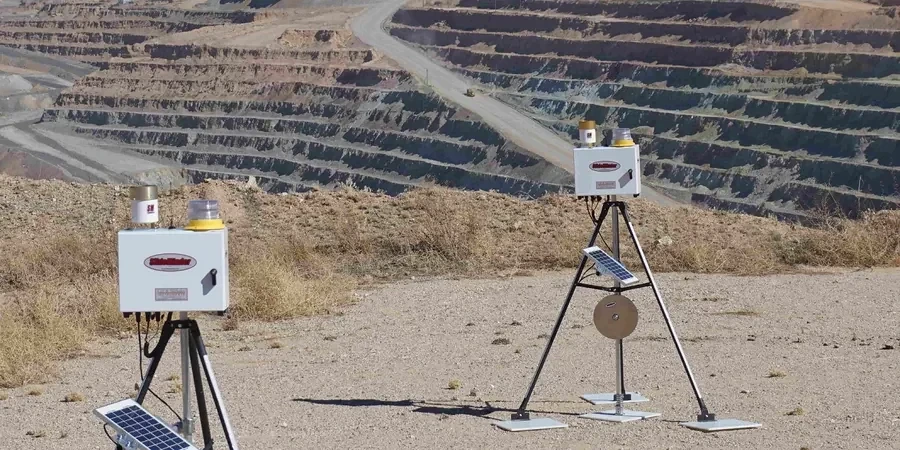
A total station with automated motor drives sits on a fixed pillar near the excavation. Prisms are spaced every 5 metres along the shoring wall. Every 15 minutes the instrument fires a round of readings. In Saanich, where glacial till and marine clay sequences change abruptly over short distances, this kind of continuous monitoring is not optional. It is the only way to catch a deflection before it becomes a problem. We run the same Leica and Trimble gear on jobs from Cordova Bay to the West Saanich Road corridor, feeding data into a cloud dashboard that the super and the geotechnical engineer can open from a phone. When a soldier pile moves 3 mm more than the trigger value, the system sends an alert. That is how we keep excavations safe here.
We trigger an alert when movement hits 80% of the threshold value, not after the limit is reached. That buffer keeps small surprises from becoming stop-work orders.
Method and coverage
Regional considerations
The 2015 demolition of the old Saanich Municipal Hall and the subsequent excavation for the new building reminded every contractor on the Peninsula how fast glacial till can unravel. A 6-metre vertical cut stood open for three days; rain got into a silt seam, and a wedge of material slid onto the footing rebar. Nobody was hurt, but the repair cost a week. Saanich sits at roughly 48.4594° N, a latitude that brings four months of heavy rain. Water is the trigger for most excavation instability here. Add the fact that many commercial strips—along Quadra, McKenzie, Shelbourne—are flanked by 40-year-old masonry buildings with shallow footings, and the risk profile is clear. Monitoring is not a checkbox. It is the feedback loop that tells you whether the ground is behaving the way the geotechnical report predicted. Without it, you are guessing with someone else's wall.
Standards that apply
ASTM D6230-21: Standard Practice for Installation and Monitoring of Inclinometers, ASTM D7299-20: Standard Practice for Verifying Performance of Vertical Inclinometer Probes, ISEE Field Practice Guidelines for Blasting Seismographs, CSA A23.3: Design of Concrete Structures (anchoring of monitoring brackets), NBCC 2020 Part 4: Structural Design (excavation and foundation provisions)
Other technical services
Shoring Wall Performance Monitoring
Inclinometers and optical survey prisms track lateral deflection and crest settlement of soldier pile, secant, or sheet pile walls. We set amber and red trigger values tied to the structural capacity of the wall and proximity of adjacent buildings.
Groundwater and Pore Pressure Tracking
Vibrating-wire piezometers and standpipes record water levels behind the wall and beneath the excavation base. Data is correlated with rainfall and dewatering flow rates to warn of excess pore pressure before base heave occurs.
Vibration and Crack Monitoring
Triaxial geophones measure peak particle velocity at neighbouring foundations during rock breaking or pile driving. Digital crack gauges and tell-tales on existing structures create a pre-construction condition baseline that protects both the owner and the contractor from liability disputes.
Typical parameters
Quick answers
What does excavation monitoring typically cost for a residential project in Saanich?
For a single-family home excavation with a basic array—three optical prisms, one inclinometer casing, and one standpipe—the instrumentation and monitoring over a 4-week period usually falls between CA$1,170 and CA$3,050, depending on depth, access, and reporting frequency. Deeper commercial cuts with automated total stations and cloud dashboards run higher because of the equipment and daily data review time.
How often are the instruments read during active excavation?
Automated total station prisms are read every 15 to 30 minutes during working hours. Inclinometers are typically surveyed manually once per day when excavation is within 2 metres of the casing, and piezometers are logged continuously if vibrating-wire types are used. The frequency drops to weekly after the permanent floor slab is poured and lateral movement stabilizes.
What triggers an alert, and who receives it?
Amber alerts fire when movement reaches 80% of the pre-set threshold; red alerts fire at 100%. Thresholds are derived from the structural deflection limits of the shoring system and the tolerable settlement of adjacent structures. Notifications go by SMS and email to the site superintendent, the geotechnical engineer, and the owner's representative simultaneously.
Do you monitor vibration during rock excavation on the Saanich Peninsula?
Yes. We use triaxial geophones set to ISEE standards, typically with a 12.5 mm/s peak particle velocity limit for older unreinforced masonry buildings and 25 mm/s for modern wood-frame construction. Real-time data is displayed on a screen at the site trailer, and alarms trigger instantly if limits are exceeded.
Can you install monitoring equipment on a neighbour's property?
We can, but it requires a right-of-entry agreement signed by the property owner. We handle the paperwork and the installation with minimal disturbance—typically a small-diameter borehole for an inclinometer or a surface-mounted prism bracket. The equipment stays in place for the duration of the excavation and is removed at project close-out. More info.